
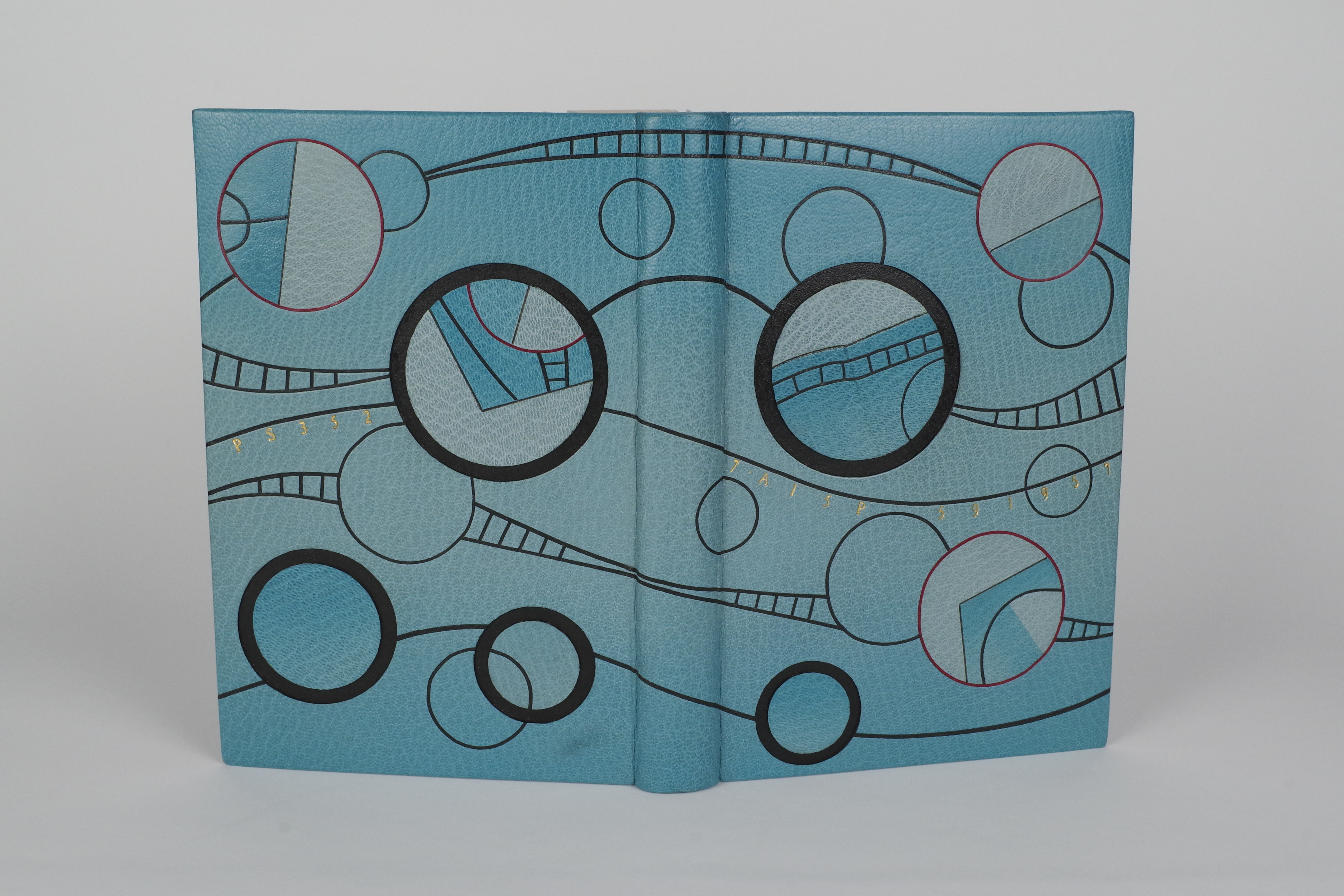
Vladimir Nabokov, Pnin (Heinemann, 1957). Bound by Glenn Malkin, 2025.
A 3-D model for this design binding is available here.
Bookbinder's Statement
The binding for Pnin is in full Harmatan goat leather, airbrushed to create gradients of colour. There are multiple back-pared inlaid leather lines in black and red. The design incorporates painted recessed channels and gold tooled numbers. The edges of the book block are sprinkled with red and blue acrylics and polished, and there are hand-sewn silk endbands in the same colours. Inside, the doublures extend the design from the covers, but also incorporate extracts from the text of the book visible beneath the recessed circles. These also then form a mirror image on the suede endpapers. The binding is presented in a suede-lined drop-back box with leather panel on the lid reflecting the design within.
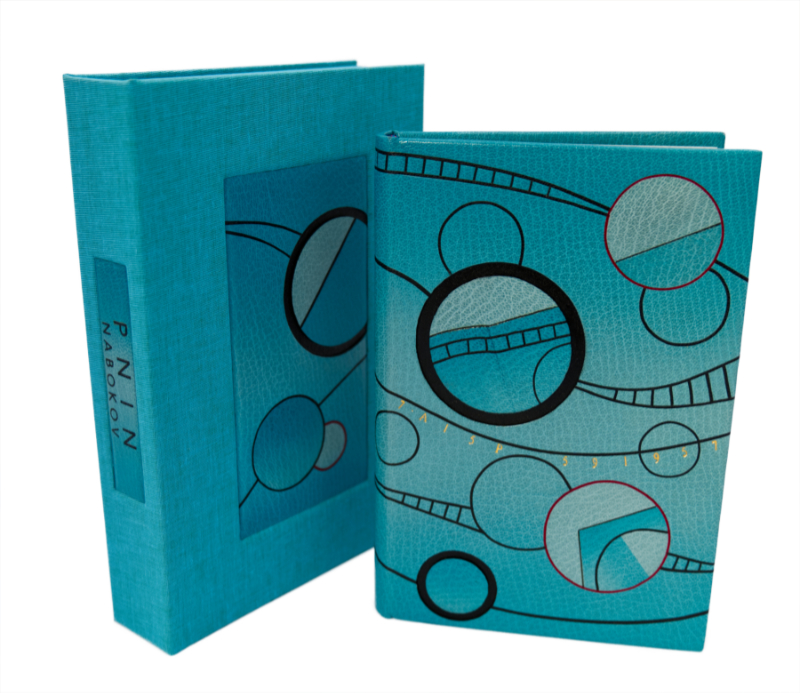
The design engages with multiple themes in the book itself as well as reflecting Nabokov’s interest in the book as a physical object and how it relates to the text. The design is organised around the idea of the main character’s spectacles through which he sees glimpses of the very book he is trapped in.
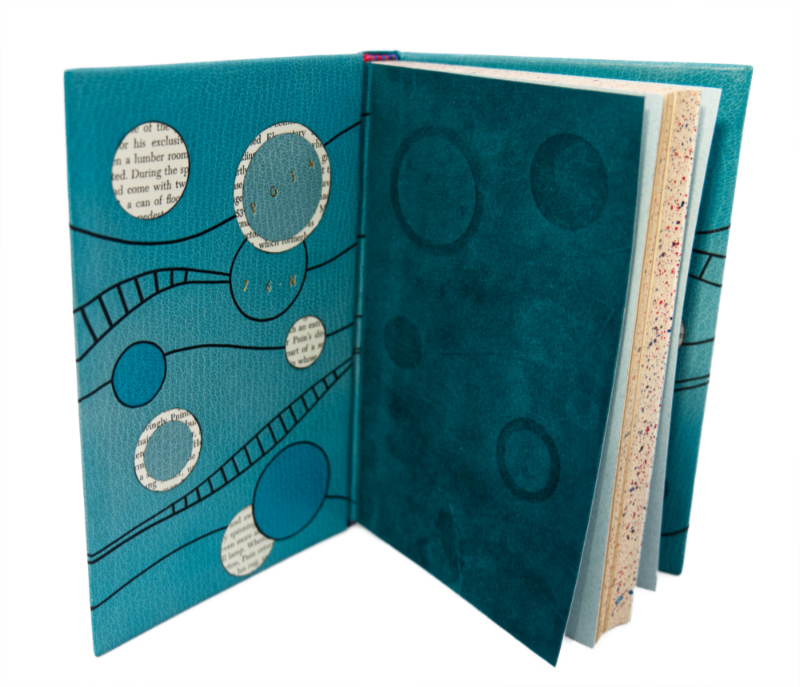
I also integrated the motif of train travel as a metaphor for the inevitable course the life of a fictional character takes. As a notable detail, the design incorporates different library call number of Nabokov’s novel Pnin which would classify the novel as either American or Russian literature, suggesting the character’s painful transition between different languages and cultures (and a memorable scene where the main character recalls a book he has already borrowed!).